How far should I place the artificial star from my telescope?
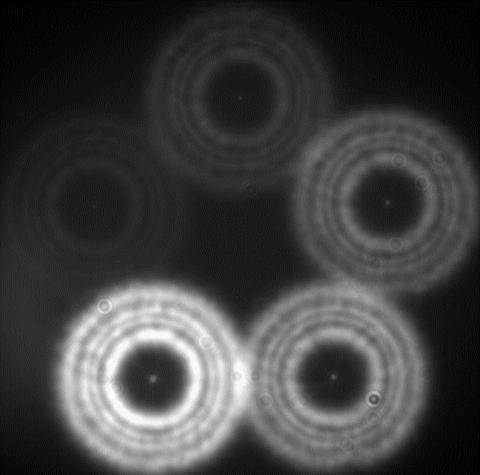
Distance depends on your aperture and the pinhole size. The artificial star must appear smaller than your
telescope's Airy disk — so larger apertures need longer distances. As a rough guide, a 4" refractor works
indoors at a few meters; a 20" telescope needs tens of meters for basic collimation and 50 meters or more
for a clean, high-quality star test with the 50-micron pinhole, especially on fast f/3–f/4 systems. If in
doubt, start far and walk closer until the defocused image is clean but still bright.
Why five pinholes instead of one?
No single pinhole works for every telescope. Fast, large-aperture systems need a very small 50-micron
source to stay unresolved, while smaller or slower scopes can use a brighter 150–250 micron star at
shorter indoor distances. Rather than force you to guess, you get all five — pick the smallest that gives
a clean defocused image, then use the magnetic mask to isolate it. A single 50-micron laser-drilled hole
from a commercial supplier typically runs $40+ on its own.
Does it work with very fast telescopes (f/3 – f/4)?
Yes — and this is exactly where single-pinhole artificial stars often fail. Fast, large-aperture systems
require an extremely small source (50 microns) to remain unresolved, and the distance needs to be long
enough that the pinhole's angular size stays below the Airy disk. With the 50-micron pinhole placed at an
appropriate distance, you can star-test and collimate fast Newtonians, Dobsonians, and large SCTs
confidently.
Will it work for standard SCTs, refractors, and Dobsonians?
Yes. The 5-Star is a universal tool. Standard f/10 SCTs, f/6–f/8 refractors, and all Dobsonians collimate
easily with one of the larger pinholes at modest indoor distances. Many customers use it for routine SCT
collimation in a hallway or long room — in broad daylight if needed.
What batteries does it use?
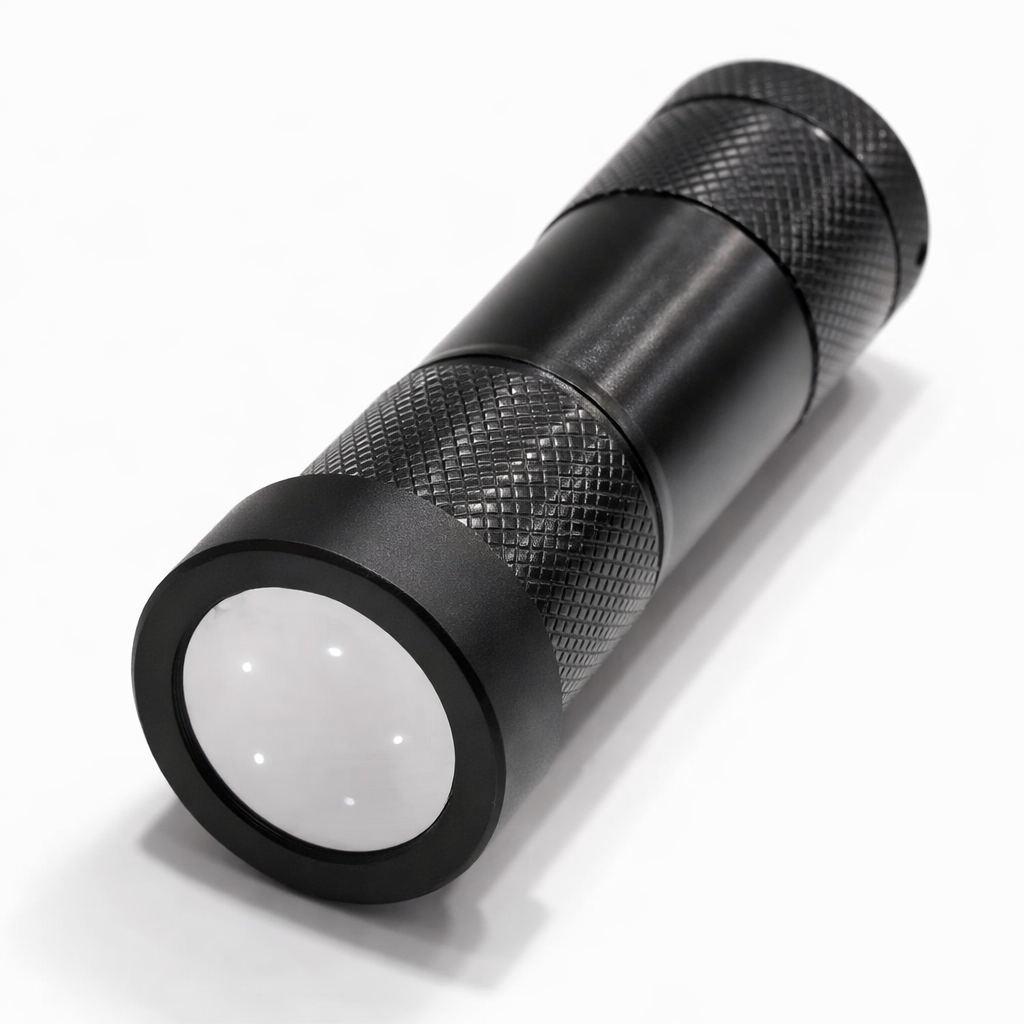
Three AAA batteries (not included). Insert them and switch on.
How do I use the magnetic mask?
The magnetic mask isolates a single pinhole by covering the other four. Pick the pinhole that gives the
cleanest defocused image in your telescope, then place the mask so only that hole is exposed. Keep the
mask clean and stored separately when not in use.
Can I collimate indoors in daylight?
Yes. The bright white LEDs are visible in a well-lit room, and the magnetic mask keeps the single isolated
pinhole bright enough against normal indoor lighting. This is one of the most popular uses of the 5-Star —
collimation any time, in any weather.